Company · Fantom Defense

Autonomy that outlives its network

Fantom Defense designs, builds and fields autonomous systems on the assumption that the link will be gone, the constellation will be contested, the runway will be cratered — and that the decision will still have to be made, and later defended in public.

7 Domains — subterranean, sea, land, air, space, autonomy, manufacturing
28 Systems and autonomy modules in the arsenal
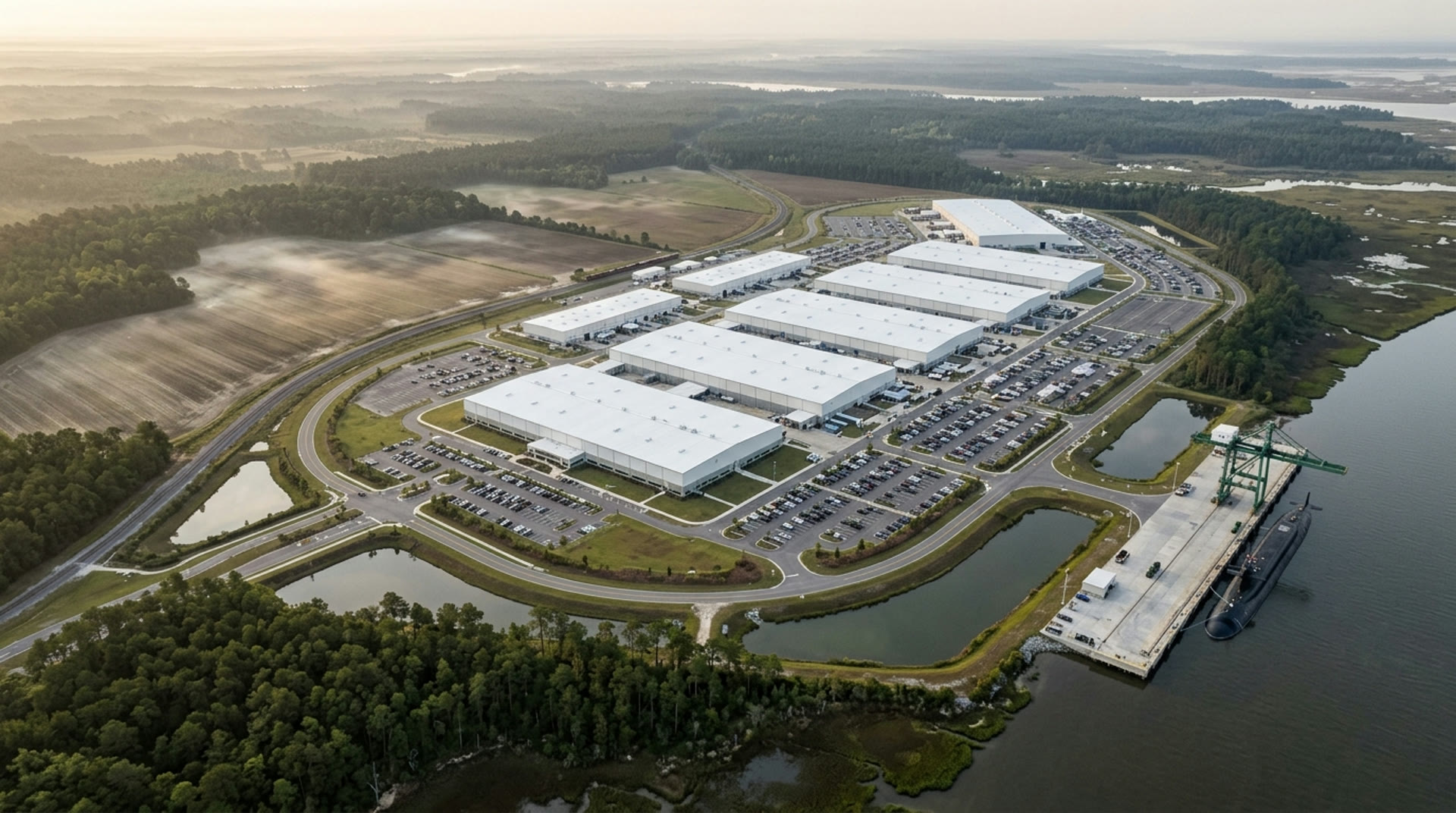
5.4M ft² Planned under roof at FORGE-1, Savannah, Georgia. Not yet built.
Q32028 Target date for first article out of FORGE-1

The thesis

01 / Why the company exists

The planning assumption

The next fight will be fought with the network down. We designed the entire company around that one sentence.

The opposite assumption is not stupid. It is inherited. Twenty-five years of counter-insurgency gave the United States and its allies uncontested spectrum, uncontested orbits, and a satellite link to a trailer in Nevada that never dropped. Every operational habit, every ground control station, every fusion architecture and most of the venture-funded autonomy built since 2015 is downstream of that experience. A peer adversary has spent those same twenty-five years studying it and building the tools to take it away: wideband barrage and reactive jamming, GNSS spoofing at theatre scale, counter-space weapons that have been tested in the open, and a demonstrated willingness to cut submarine cables and call it an anchor.

So the honest planning assumption is not degraded communications. It is absent communications — for hours, in a specific geography, at the exact moment the fight starts, and again every time the adversary decides. A system whose behaviour under that condition is "hold last commanded state and wait" is not an autonomous system. It is a remotely operated one with a good marketing department.


What that assumption forced us to build

REVENANT CORE degrades toward itself. Every node carries the complete mission model, the full rules-of-engagement gate, and the whole mission plan in a 40 W SWaP envelope. There is nothing above it to fall back to, because there is nothing above it. That is not a fallback mode we bolted on. It is the only mode, and everything else — the mesh, the fleet retraining loop, the crewed-force gateways — is an accelerant layered on top of a node that was already sufficient.

Building it that way is the expensive option and we chose it with our eyes open. The world model has to be built, compressed and loaded before the sortie, because nothing can be fetched in flight. Every node pays in watts, memory and storage for a bad hour that may never come. And a 40 W computer will never assemble the cross-theatre correlation that a room full of racks can. We traded the biggest possible picture for the picture that will still exist in hour seventy-two.

This is an engineering bet, not a moral one. In the first seventy-two hours of a Pacific fight, the only context a node can rely on is the context it is carrying, so we spent the whole SWaP budget making sure it is carrying enough.


The second constraint

There is a constraint on autonomous lethality that has nothing to do with engineering, and it kills more programs than any technical failure: a commander cannot authorize what he cannot audit, and a government cannot defend in public what it cannot reconstruct. Ask why smart mines are not in the water despite forty years of adequate technology. The answer is not sensors. The answer is that nobody could tell a lawyer what the weapon would do, under whose authority, and how anyone would ever know.

Process does not answer it — an ethics board, a policy statement and a promise that a human is somewhere near the loop do not survive their first bad day. Our answer is an artifact: a hash-chained, cryptographically signed record written at the edge, exportable, and verifiable offline by software we do not control. See Auditable autonomy.


The third constraint

A runway is a coordinate. So is a drydock, a crane rated over 30 tons, and a shipyard. Every fixed airfield inside the first island chain has a published heading, a surveyed threshold and a known maximum-on-ground. It is a target set, not a sanctuary — and a fleet that cannot generate a sortie without one has already conceded the opening move.

So nothing in our arsenal requires a fixed base. WRAITH launches from sixty feet of transportable rail. LEVIATHAN goes in the water from a commercial pier. STYX sails from any quay. VIGIL self-erects in eleven minutes with one person. That constraint costs us performance in places — a rocket-assisted rail launch is expensive in mass and in structure — and we pay it deliberately.

Three things we do differently

02 / The design points

01 / Comms-denied first

REVENANT CORE is a complete autonomy runtime that fits inside 40 watts. It holds the world model, the mission graph, and a deterministic rules-of-engagement gate that runs on an isolated processor and cannot be modified by a model update. A node that has heard nothing for eleven days is still executing the mission it was given, still classifying, still refusing engagements that fail a gate predicate, and still writing a signed record of every one of those decisions.

REVENANT MESH is peer-to-peer with no master node and no cloud tether. It opportunistically uses whatever bearer exists — RF where RF is survivable, free-space optical where emission control forbids RF, acoustic where there is water or rock between the nodes. Undersea and subterranean are not edge cases we grew into; they are the two environments that forced the bearer-agnostic design, and they are the two that make the rest of it obvious: if the picture is not already on the node, at four hundred metres of depth or eighty metres of rock it does not exist.

The acceptance test is blunt: cut every bearer, and the system must finish the mission and be able to prove afterwards what it did. If it cannot, it is not finished.


02 / Auditable autonomy

REVENANT LEDGER is a hash-chained, cryptographically signed record of every observation, classification, human authorization and engagement, written on the node, at the moment it happens, by a discrete secure element. It survives the loss of the network, the loss of the manufacturer, and the loss of the node itself, because its epoch roots are witnessed into the ledgers of every peer that heard it.

The gate is what makes this more than logging. Predicate 5 requires a valid, scoped, expiring authorization token signed by an attested human before any release of force; the node cannot mint one and cannot extend one. Predicate 9 requires that the ledger itself be writable. If the record cannot be written, the engagement cannot be authorized. Accountability is not a feature that can be switched off under load — it is load-bearing structure.

We are precise about what that is worth, because overstating it is the fastest way to lose the argument. An ordinary audit log is written by software the operator controls, needs a network to reach the place it is stored, and has nothing to say about a node that spent eleven days alone. The LEDGER is the opposite on all three counts: written on the node by a discrete secure element, witnessed into peers within seconds, and verifiable by a third party offline. We will publish the record schema, the signing scheme, the export format and the verifier, so the claim can be checked rather than believed — none of it is published yet. That is a foundation decision, not a sprint.


03 / Runway- and port-independent

WRAITH launches off a sixty-foot transportable rail carried on two standard trailers: 3.4 g axial for 2.9 seconds to 155 knots, rocket-assisted, from a highway, a hardstand, or a well deck. Conventional takeoff is retained, because taking a capability away is not a design philosophy. The point of the rail is that it changes the adversary's targeting problem from "strike six known airfields" to "find a forty-foot cradle somewhere in an archipelago."

The same rule governs the sea line and it is the reason FORGE-1 sits where it does. LEVIATHAN is 68 feet and 190 tonnes; there is no road route for that hull and no crane over 30 tonnes in the launch sequence, because a plant that needs one has bought a dependency it cannot move. Our quay is inside the fence line. A hull leaves the outfitting hall and is in blue water the same day.

A runway is a coordinate.

Design rule, Air Systems

Where we stand

03 / What we will not claim

Read this before the product pages

Nothing on this site is in service. Every system here is in development, and we would rather you learn that from us on the way in than discover it later — because a fielded system is worth more than a good drawing, and we do not yet have one.

WRAITH has not flown. It is in development and first flight is targeted for Q1 2029. Until an airframe leaves the ground, the performance on its page is analysis — careful analysis, done by people who have taken aircraft to first flight before, but analysis. If a program office needs a collaborative combat aircraft in the air this year, we are not it. We will say that in a briefing room as readily as we say it here.

We are also clear-eyed about what a specification is. Every number on this site is a design target, not a test result. Design targets are cheap and flight test is expensive, and the gap between the two is where defense companies go to die. We publish the targets anyway, with the tolerances and the tradeoffs, because a program officer can do arithmetic and a program officer who catches you rounding in your own favour never trusts you again.

So Fantom Defense stands on architecture, not on maturity — we do not have maturity yet. The claim is specific: a system that degrades toward itself, proves what it did, and needs no fixed base is the right system for the fight now being planned for. That claim is checkable, and the two columns below are where we check it against ourselves.

Where we are behind, today

Flight test
WRAITH has not flown. It is in development and first flight is targeted for Q1 2029. No flight-test data exists yet.
Fielded systems
None. No system on this site has been built, delivered to a customer, or deployed. TIDEWALL is a design like the rest of the arsenal. We are pre-revenue.
Surface vessels
No STYX hull has been laid. The ship is a design, a weight statement and a build plan; the quay that will launch it is a permit path, not poured concrete.
Manufacturing
FORGE-1 is a site, a permit path, a purchase option and a schedule. First article is targeted for Q3 2028 and there is no building on the ground today.

Where the architecture is ours

Accountability
REVENANT LEDGER commits to publishing all four pieces an audit actually needs: the record schema, the signing scheme, the export format and an offline third-party verifier. The verifier is built and under test; publication is pending. The point is that the claim becomes checkable rather than asserted.
Part provenance
FORGE OS hashes every part from raw stock to fielded serial number, so a serial that comes home from a fight walks back to the mill heat it was poured in.
Space maneuver
CHARON, SHROUD and BEACON put orbital transfer, proximity operations and alternative PNT on one autonomy runtime. CHARON carries 3.1 km/s of delta-v.
Subterranean
Four named products — CATACOMB, DOWSER, BARROW and WAKE — specified, costed and published with their numbers, not a statement of vision.
Siting
The FORGE-1 site has the federal channel at the property line — 34 ft of water, today, on a parcel under option. The 1,850 ft of quay is designed and not built; the point of the siting is that a 190-tonne hull will reach blue water without a permit or a truck.

Every number on this site is a design target unless it is marked as measured, and the status statements above were true on 31 July 2026. If one of them stops being true, tell us and we will change it.

Auditable autonomy

04 / Ethics and accountability

The argument we take seriously

The honest case against autonomous weapons is that they diffuse responsibility until no human is accountable for a death. It is a serious argument. We do not think it is answered by a policy statement.

It is answered by a record. For every autonomous engagement a Fantom system conducts there exists a named human, a signed and scoped authorization, a timestamp, the identity hash of the model that made the classification, the confidence it reported, and a reconstructable decision path from photon to effect. That record is exportable and can be verified on an air-gapped laptop using a published verifier that we do not control, by an inspector general, a court, a Congressional committee, an ally's ministry of defence, or a journalist.

The denial history matters as much as the engagement history. Every gate decision is recorded, PERMIT and DENY alike, with the failing predicate named. A record of restraint is evidence in a way that a policy commitment never is — and it is the reason we are willing to publish our own overconfidence. Because the ledger records the confidence a classifier reported, it also records the times that confidence was wrong. That is not a bug in the transparency argument. It is the best available evidence that the ledger is not marketing.

When the hearing comes — and it will come, for this whole industry — the company that can hand over a verifiable record survives it, and the company that hands over a slide deck does not.

DoD Directive 3000.09

DoDD 3000.09, updated 25 January 2023, requires that autonomous and semi-autonomous weapon systems allow commanders and operators to exercise appropriate levels of human judgment over the use of force; that they undergo rigorous verification and validation and realistic operational test; that they be robust enough to minimise unintended engagements; and that certain systems pass senior review before development and before fielding. The Department's Responsible AI principles add that systems be traceable and governable. We are engineers, not lawyers, and this is not a legal opinion — it is a statement of what the artifact was built to satisfy, on purpose.

Directive requirement · REVENANT mechanism
Appropriate human judgment A valid, scoped, expiring authorization token signed by an attested human is necessary for any release of force. The node can neither mint nor extend one, and every engagement record names the authorization and the human who signed it.
Rigorous V&V and realistic test A seven-gate release process with a dual-key signature; the release itself is a ledger entry, and every classification names the model hash that produced it. You can prove which build flew, on which node, at which second.
Minimise unintended engagement A deterministic gate on an isolated processor evaluates nine predicates and defers by default under uncertainty. The gate cannot be modified by a model update.
Activate, deactivate, abort Abort and revocation travel at the highest priority on every bearer, pre-empting all other traffic. Token expiry is an autonomous deactivation that requires no connectivity at all.
Traceable A hash-chained record from photon to effect carrying model identity, confidence and evidence provenance at every step. Verifiable offline.
Governable Authorization scope is the governing instrument and it is enforced in silicon at the gate rather than in a procedure. The scope travels inside the signed token and inside the record.
Senior review The review board's three questions — what will it do, under what authority, and how will you know — are the fields of the record schema. Reviewers can be handed a real export from a test event instead of a briefing.

Standing rules

Human authorization
No Fantom system releases force without a scoped, expiring authorization signed by an identified human. There is no configuration, customer request or emergency mode that removes this.
Fail closed
If the ledger cannot be written, the gate cannot permit. Loss of accountability is treated as loss of the weapon, not as a degraded mode.
Customer set
The United States and its treaty allies and designated partners, through the Foreign Military Sales and Direct Commercial Sales processes and their licensing requirements. No exceptions on the basis of price.
Export control
Programs are conducted under ITAR and EAR. No export-controlled technical data is published on this site, and no technical data is released outside a licence.
Independent access
The ledger verifier runs offline and will be published as source, so a customer's ability to audit our systems does not depend on our continued existence or cooperation. It is built and under test; it is not published yet.
Incident disclosure
Where a Fantom system contributes to an unintended engagement, the relevant ledger export is provided to the investigating authority in full, including the records that are unflattering to us.

How the ledger works

One company, three markets

05 / Fantom Aero · Fantom Robotics · Fantom Defense

Why the siblings matter

Fantom Defense is the third Fantom company. Fantom Aero builds crewed electric aircraft; Fantom Robotics builds legged and humanoid robots. The three are separate businesses with separate customers, and this site speaks only for the defense company. But they are not separate engineering organisations, and pretending otherwise would give a reader the wrong picture of how fast this can move.

Shared autonomy stack. REVENANT CORE is the same runtime underneath all three. A flight-control and world-model stack that has to keep a person alive in a crewed aircraft is held to a certification standard that an uncrewed system usually escapes, and that standard flows down to the defense products rather than up from them. The locomotion work is the clearest example running the other way: MARROW, our uncrewed ground vehicle, follows a dismounted squad through terrain that defeats a conventional UGV because it borrows the Fantom Robotics locomotion stack outright. Fantom Robotics' humanoid program is the land domain's crewed-adjacent robotics entry; we reference it rather than re-specifying it here.

Shared manufacturing. All three build at FORGE-1. That is the argument for a 5.4 million square foot single-story plant instead of three smaller ones: composite autoclave and automated fibre placement capacity, a machine shop, an additive cell, a wire harness shop and a test campus are enormously expensive to stand up and are the same equipment whichever company is queueing for it. FORGE OS runs the floor for all three, and hashes every part from raw stock to fielded serial number regardless of which company's name goes on the airframe.

What is not shared. Classified and export-controlled work, program data, and personnel with access to it. Those are firewalled by contract, by facility and by system, and the arrangement is documented for the government customer rather than described in prose on a website.

FORGE-1 — Savannah, Georgia

Leadership

06 / Roles and responsibilities

How we publish this

Fantom Defense is founder-led, and shares its leadership with Fantom Aero and Fantom Robotics. Below are the people who run the company, then the roles that exist, what each one is accountable for, and who signs what.

We publish both, because they answer different questions. A biography tells a program officer who we are. It does not tell them who holds release authority for a flight-test card, or who signs the second key on an autonomy build. The org chart does. Clearance status and past performance are tied to named individuals in a capability statement provided to government customers and primes on request.

Founders

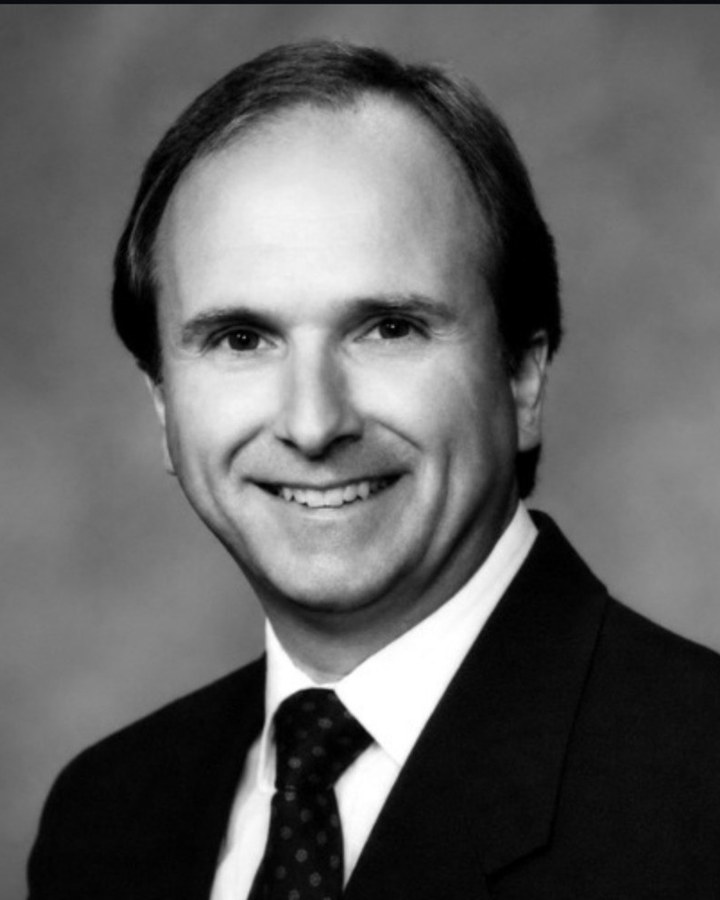
Graham Kramer, Founder and Chief Executive Officer

Founder & Chief Executive Officer

Graham Kramer

Thesis · Product · Capital

A brand and technology strategist turned aerospace and robotics founder. At Allergan he served as Chief of Branding and was a strategic member of the executive team behind the company's approximately $60 billion sale.

Founder and CEO of Fantom, the company behind the Fantom X personal eVTOL, and founder of Fantom Robotics, developing the GHOST humanoid. At Fantom Defense he owns the thesis, the product line and the capital plan, and chairs the autonomy release board.

Robert Aughey, Co-Founder and President

Co-Founder & President

Robert Aughey

Markets · Systems · Operations

A former United States Marine and a nationally known futures, forex and options trader and trading-system developer. He holds a bachelor's degree in business from Fairleigh Dickinson University, and pairs the discipline forged in the Marine Corps with a command of risk and capital under pressure.

As President he drives operations, capital strategy, compliance and growth. He has spent a career teaching machines to make decisions no one gets to second-guess — which is, not coincidentally, this company's core problem.

The team

Dre London, Chief of Strategy

Chief of Strategy · Board

Dre London

Brand · Reach

Founder of London Entertainment and the manager who built Post Malone from unsigned artist to diamond-certified global act. Variety Hitmakers Manager of the Year. At Fantom he drives brand and consumer reach.

Ryan Andreas, Chief Marketing Officer

Chief Marketing Officer · Board

Ryan Andreas

Growth · Acquisition

Managing Partner of Quantified Media, which he scaled to more than 140 people across three countries. An entrepreneur since age 13 who has driven over $5 billion in ARR. He leads customer acquisition and digital growth.

Max Gilbane, Chief of Operations

Chief of Operations · Board

Max Gilbane

Operations · Build

Business Development Director at EquipmentShare, where he leads the strategic partnership with Gilbane Building Company, driving adoption of the T3 platform across mega-site construction projects.

The roles

Founder & Chief Executive
Owns the thesis, the product line and the capital plan. Final authority on what the company will and will not build, and on the standing rules above. Chairs the autonomy release board.
Chief Engineer, Autonomy
Technical authority for REVENANT — CORE, MESH, FORGE, LEDGER and LINK. Owns the rules-of-engagement gate specification and holds one of the two release keys for any build that can authorize force.
Chief Engineer, Air Systems
Technical authority for WRAITH, POLTERGEIST, BANSHEE, SHADE, SPECTER and REQUIEM. Owns airworthiness, the launch and recovery concept, and the weight statement.
Chief Engineer, Maritime Systems
Technical authority for LEVIATHAN, STYX, DEADFALL and TIDEWALL. Owns pressure hull certification, stability and the undersea safety case.
Chief Engineer, Ground & Subterranean Systems
Technical authority for VIGIL, PALL, CAIRN, MARROW, VEIL, CATACOMB, DOWSER, BARROW and WAKE. Owns the dismounted-user requirements that most autonomy programs discover too late.
Vice President, Manufacturing (FORGE-1)
Accountable for the plant: construction, tooling, rate, quality, and FORGE OS. Owns the first-article schedule and the cost-per-unit curve that the whole affordability argument rests on.
Vice President, Mission Operations & Test
Runs ground test, flight test, sea trials and customer employment events. Holds release authority for every test card and the authority to stop any test.
Vice President, Programs & Capture
Owns the government relationship: requirements dialogue, proposals, contract performance, and the cost and schedule commitments the company makes in writing.
General Counsel
Law of armed conflict review of every autonomy concept of employment, DoDD 3000.09 senior-review preparation, export licensing, and the ledger's evidentiary design. Independent reporting line to the founder.
Director, Security & Facility Security Officer
Personnel and industrial security, classified program execution, insider threat, and the firewall between Fantom Defense program data and the sibling companies.
Director, Supply Chain
Sourcing, qualification of domestic and allied second sources, counterfeit-part defence, and compliance with prohibited-source rules. Owns the FORGE OS provenance requirement at the supplier interface.
Director, People
Hiring, clearance sponsorship, the FORGE-1 workforce pipeline including the welder school, and veteran recruitment.

Open roles

Government, primes and partners

07 / Contact

Who to write to

Program offices, primes, allied ministries and suppliers are handled by named desks rather than a general inbox. Mail sent to the wrong address is forwarded, not lost, but the right address is faster.

Government & program offices
programs@fantom.aero — requirements dialogue, capability statements, RFI and RFP response, briefings and demonstrations. Include your organisation and, if applicable, the solicitation number.
Primes & industry
programs@fantom.aero — teaming, subcontract and payload integration. REVENANT LINK gateway questions come here too.
International
international@fantom.aero — allied ministries of defence and authorised representatives. All discussions are conducted under US export licensing.
Press
press@fantom.aero — see also the newsroom press desk.

Full contact directory

Notices

08 / Privacy · Terms · Accessibility · Disclosure

Privacy

This site collects the minimum required to serve it. We do not run advertising trackers, we do not sell or share personal information, and we do not build behavioural profiles of visitors. Server logs — IP address, user agent, requested path, timestamp — are retained for a short period for security and capacity purposes and then discarded.

If you write to one of the addresses on this site, we hold your message and contact details for as long as needed to answer it and to meet our record-keeping obligations as a government contractor. We do not add you to a marketing list. To ask what we hold about you, or to ask us to delete it, write to privacy@fantom.aero.


Terms

The content of this site is provided for information. Performance figures, schedules and capability descriptions are design targets and program plans; they are not guarantees, offers, or representations of tested performance, and they are subject to change without notice. Nothing here constitutes an offer to sell, an agreement to supply, or a commitment of any kind. Forward-looking statements about schedule, rate and capability carry the risk inherent in a development program.

No export-controlled technical data is published on this site. Technical data subject to the International Traffic in Arms Regulations or the Export Administration Regulations is released only under an appropriate licence or exemption and only to authorised recipients. FANTOM, the ghost mark, REVENANT, WRAITH and FORGE-1 are trademarks of Fantom. All other marks belong to their owners; their use here is descriptive and does not imply endorsement.


Accessibility

We build to the Web Content Accessibility Guidelines 2.2 at Level AA as the working standard, and to Section 508 for anything delivered to a federal customer. In practice that means semantic structure and real headings, a visible focus indicator on every interactive element, full keyboard operability including the search overlay and the mobile menu, text contrast that meets the ratio at the size it is used, no information carried by colour alone, captions and posters on every video, and complete honouring of the reduced-motion preference — the site's animation collapses to nothing when your system asks it to.

This is a standard we hold ourselves to, not a certification we claim. If something on this site is not usable with your assistive technology, that is a defect and we want the report: accessibility@fantom.aero. Tell us the page, the tool and what happened, and we will respond within ten business days.


Responsible disclosure

A company that argues cryptographic accountability is the foundation of its products has no business being defensive about vulnerability reports. If you have found a security issue in this site, in our published tooling, or in a Fantom product you are authorised to test, write to security@fantom.aero. A PGP key is published at /.well-known/security.txt.

We acknowledge within three business days, give you an assessment within ten, and agree a disclosure timeline with you — ninety days by default, shorter if a fix ships sooner, longer only if a fielded safety issue requires it and only with your agreement. We will not pursue legal action against a researcher who acts in good faith, stays within the scope of their own systems and our public surfaces, avoids privacy violations and service degradation, and does not exfiltrate data. Credit is given unless you ask us not to.

Do not send classified or export-controlled information to this address, or to any address on this site. If your finding touches classified material, stop and contact the relevant government program office through its own channel.