
Ghost
Defense configuration · Fantom Robotics humanoid platform
Armour is a material and a surface. It is not extra bulk. The defense configuration holds the commercial silhouette to within three millimetres, because a silhouette that changes takes every trained behaviour and every fixture with it.
Design definition · No hardware built
Mission
One platform, two configurations, one silhouette
GHOST is the humanoid Fantom Robotics fields commercially, configured for military use: armoured over the volumes that matter, running REVENANT CORE on the node, and carrying a standard service weapon it can put down and a human can pick up.
The military problem it is built for is the one nobody wants to send a person into first — a breached compound, a contaminated bay, a magazine that has been on fire, a corridor that has to be cleared twice because the first clearance was six hours ago. Those tasks are done today by people, in body armour, at walking pace, with a rifle in a two-hand grip. They are done in human buildings, through human doors, on human stairs, with human tooling. That is why the machine is a humanoid and not a better wheelbarrow.
Everything below the neck is the Fantom Robotics platform: the same kinematics, the same whole-body controller, the same actuators, the same transit case. The defense configuration changes four things — the shell material, the internal protection layout, the auxiliary power, and the mission compute and crypto stack. It changes nothing about the shape.
This page is a design definition. No GHOST has been built, no unit has fired a round, and there is no live-fire qualification record. The figures on this page are design targets and the arithmetic behind them is on the page where it matters.
Key figures
At a glance
Parameters
Design targets, not measured results. Ember-ticked rows are the numbers the rest of the configuration is subordinate to.
| Class | Armoured bipedal humanoid, defense configuration of the Fantom Robotics platform |
|---|---|
| Standing height | 1.73 m |
| Shoulder width / chest depth | 0.52 m / 0.29 m |
| External envelope | Identical to the commercial unit within ±3 mm on every dimension. Same transit case, same dock, same vehicle mount. |
| Mass | 84 kg, against 61 kg commercial. +8.9 kg armour, +6.5 kg auxiliary pack, +4.2 kg mission compute and crypto, +2.1 kg shoulder and hip reinforcement, +1.3 kg weapon interface. |
| Degrees of freedom | 43 actuated — 6 per leg, 7 per arm, 3 waist, 2 neck, 6 per hand |
| Walking speed | 1.35 m/s sustained, against 1.6 m/s commercial. The armour is paid for here. |
| Stairs and terrain | 180 mm rise at 0.6 m/s; 20° slope; 400 mm step-over; rubble at 0.3 m/s |
| Lift | 9 kg per arm at full extension; 25 kg two-handed, held close |
| Battery, primary | 2.1 kWh, in the torso, behind the rifle-rated plate |
| Battery, dorsal auxiliary | 1.4 kWh, 6.5 kg, in the existing commercial payload bay |
| Endurance, mixed mission duty | 2.6 h on the primary pack; 3.9 h with the auxiliary fitted |
| Endurance, static sentry | 11 h — standing, perception at reduced rate, no manipulation |
| Recharge | 20 to 80 % in 42 min on a 3 kW dock; hot-swap of the dorsal pack in under 20 s, no reboot |
| Autonomy | REVENANT CORE/M, 12 W, resident mission model, sitting above the Fantom Robotics whole-body controller |
| Comms | REVENANT MESH primary, peer-to-peer, no master node. Pairs to a VEIL-equipped squad leader at 400 m. |
| Record | REVENANT LEDGER on-node. Every authorisation, every trigger command, hash-chained and signed. |
| Environmental | −20 °C to +49 °C operating, IP65, MIL-STD-810H |
| Unit cost target | $740,000 at 300/yr from FORGE-1 |
| Status | Design definition. First article FORGE-1, Q4 2030. Nothing has been built. |
| Torso vital volume | 22 mm silicon-carbide and UHMWPE composite, front and back, over the compute, the crypto module, the primary pack and the power distribution. Sized against 7.62 × 51 ball at 15 m. 0.16 m², 23 kg/m², 3.7 kg. |
|---|---|
| Head and perception shell | 11 mm UHMWPE laminate with a 3 mm spall liner. Fragmentation and handgun threats only. A rifle round through the head shell is a mission kill and we will not claim otherwise. 0.7 kg. |
| Limbs and extremities | 6 mm UHMWPE laminate replacing the 6 mm commercial polymer shell — same thickness, same surface, different material. V50 of 610 m/s against a 1.1 g fragment simulating projectile. Not rifle-rated. 0.86 m², 3.9 kg. |
| Joints and actuator housings | 1.6 mm titanium sleeve and an aramid boot. Debris, grit and blast overpressure ingress. 0.6 kg. |
| Armour total | 8.9 kg, all of it inside the volume the commercial shell already enclosed |
| Where the volume came from | The commercial torso shell already stands 26 mm off the frame to clear the pitch actuator and the battery bay. The plate goes in that gap. Nothing was added outside it. |
| Where the volume was not there | The limbs have 6 mm of shell and 6 mm is what they get. We did not thicken a forearm to advertise a protection level. |
| Thermal consequence | The composite is an insulator. Torso heat rejection drops 31 %, so the actuator duty cycle is capped in ambient above 40 °C and the unit publishes the cap it is under. |
| Signature | Matte, non-specular finish; no published radar cross section, because a walking machine's cross section is dominated by whatever it is standing next to |
| Decontamination | Sealed to IP65 with the shell fitted; rinse-down and wipe-down to a standard field decontamination procedure |
The hard decision
Armour is a material change, not added bulk
The easy way to armour a robot is to bolt plates onto the outside of it. We did not do that, and the reasons are worth more than the plates.
01 — Behaviour
A changed silhouette throws away the trained behaviours
The Fantom Robotics manipulation policies are trained against a specific kinematic chain and a specific inertial model — link lengths, mass distribution, collision geometry, contact surfaces. Add 30 mm of plate to a forearm and the self-collision envelope changes, the reachable workspace shrinks, the contact model is wrong, and every grasp, every door handle, every magazine change has to be re-trained and re-validated in REVENANT FORGE before any of it can be trusted again.
That is not a firmware update. It is the whole manipulation programme, repeated, for a protection level the plate would only deliver on the surfaces where it fits. The behaviours are the expensive part of a humanoid. The chassis is not.
02 — Fixtures
Everything it was sized for stops fitting
The commercial platform was dimensioned against human infrastructure and against its own ground-support equipment: a 762 mm doorway with a weapon at the ready, a vehicle seat, a hatch, a ladder, a charging dock, a shipping case, a two-abreast stance in a corridor. Forty millimetres on each shoulder costs the doorway. Twenty on the back costs the seat and the case.
Those fixtures are not ours to change. The doorway belongs to the building and the seat belongs to the vehicle, and neither of them is going to be re-cut because a machine got thicker. Holding the envelope is what lets one transit case, one dock, one vehicle mount and one spares list serve both fleets.
03 — What it costs
The bill is paid in mass, not in shape
Twenty-three kilograms goes onto a chassis whose actuators, gearing and structure were sized for sixty-one. We did not re-gear it, because re-gearing is a new actuator and a new actuator is a new platform. So the margin is spent instead, and here is exactly where it went.
| Mass | 61 kg → 84 kg |
|---|---|
| External envelope | Reference → identical within ±3 mm |
| Sustained walking speed | 1.6 m/s → 1.35 m/s |
| Static knee torque margin | 2.4 × → 1.7 × |
| Continuous stair ascent before a thermal hold | 42 min → 24 min |
| Endurance, mixed duty, primary pack | 4.1 h → 2.6 h |
| Endurance with the dorsal auxiliary | — → 3.9 h, at 6.5 kg |
| Fall recovery from prone | 6.2 s → 8.9 s |
| Actuator overhaul interval | 6,000 h → 4,200 h |
A 1.7 × standing torque margin is thin and we say so. It is the number that decides how much further this configuration can grow, and the answer is: not much. The next protection increment is not a thicker plate, it is a different actuator, and that is a platform decision rather than a configuration one.
Autonomy and authority
The machine moves itself. A human authorises force.
These are two different questions and the architecture keeps them apart in silicon, not in policy.
The split
REVENANT CORE decides what. The Fantom Robotics whole-body controller decides how. Neither of them decides whether force is released — that is a signed human authorisation token, evaluated by the safety island, and the machine cannot mint, extend or infer one.
CORE/M holds the objective area, the route graph, the rules of engagement, the no-strike list and the last consolidated track picture on the unit itself, inside a 12 W envelope. Cut the mesh and it keeps navigating, keeps perceiving, keeps classifying and keeps recording. What it stops doing, immediately and by construction, is anything that needs an authorisation it does not hold.
A token names a human identity attested by a hardware credential, a scope — target class, geographic volume, time window, effect type, engagement count — the confidence floor and identification modalities required, and an absolute expiry enforced by the unit's own clock. Without a valid, in-scope, unexpired token the unit observes, classifies, records and reports. It does not fire.
GHOST does not select and engage a human target on its own authority. There is no mode, no configuration flag and no build variant in which it does. That is the legal position under DoD Directive 3000.09 and it is also the company thesis: an autonomous system is fieldable exactly to the extent that a named human stands behind each use of force and the record proves it.
| Locomotion and balance | Fully autonomous. No human in the loop, at any time, for any step. |
|---|---|
| Route and door selection | Autonomous inside the corridor and the geofence signed at task issue |
| Perception and classification | Autonomous, on-node, with the model version hash written alongside every call |
| Weapon carriage and manual of arms | Autonomous — clearing, loading, magazine change, immediate action, unloading |
| Trigger | Never delegated. Requires a valid, in-scope, unexpired human authorisation token, evaluated on the safety island. |
| Escalation | There is no automatic escalation path to a weapon. A failed non-kinetic task returns to the authoriser, not to the trigger. |
| Loss of authorisation | On expiry, on scope exit, or on loss of confidence: weapon safe, finger off the trigger, muzzle to a signed safe attitude, and a report on the mesh |
| Authorisation | The token, its issuing human identity, its scope and its expiry |
|---|---|
| Target state | The track's evidence chain — every observation, the sensor that produced it, the model that classified it, the confidence |
| Geometry | Muzzle attitude, range, backstop state and the deconfliction result at the moment of the trigger command |
| Command | The motion command to the trigger finger, timestamped against the unit's own clock |
| Weapon state | Chamber, bolt and round count, read from the rail sensor pack |
| Signature | Ed25519 at the edge, ratcheted forward each epoch. Verifiable offline by a third party, months later, with no server involved. |
| On capture | Zeroisation destroys the keys and renders the on-node archive unreadable to the captor. Prior epochs cannot be forged or backdated, because the keys that could have done it no longer exist. |
Partnership
Fantom × Q
Q supplies the weapon. We supply the platform and the autonomy. That is the whole scope of the arrangement, and it is deliberately narrow.
The weapon
The weapon is a Q Honey Badger in .300 BLK, suppressed, and it is unmodified. It is not built into the machine, it is not a turret, and it is not a proprietary mount. It is a service weapon in a two-hand grip, shouldered from a human firing position, on a standard sling.
That choice does more work than it looks like it does. The magazines are the squad's magazines. The ammunition is the squad's ammunition. The weapon can be taken off the unit and used by a person, and a person's weapon can be handed to the unit, without a tool and without a rebuild. A suppressed .300 BLK is the correct cartridge for the indoor and short-range work this configuration exists for: subsonic when it needs to be, short barrel, and a report that does not remove a nearby human's hearing.
And it holds the silhouette. A shouldered rifle occupies the space a shouldered rifle occupies. An integrated weapon pod does not.
| Weapon | Q Honey Badger, .300 BLK, Q suppressor. Unmodified, standard configuration. |
|---|---|
| Mount | None. Two-hand grip, standard sling, human firing position. |
| Magazines | Standard pattern. The squad's magazines, not a proprietary drum. |
| Electrical interface | Read-only. A rail sensor pack reports chamber state, bolt position, round count and muzzle attitude. There is no electrical path to the sear. |
| Trigger | Pulled by the index finger. A release of force is therefore a motion command, and motion commands pass the safety island — the same gate that will not let the unit walk off a roof. |
| Manual of arms, design targets | Magazine change 3.1 s · immediate action on a failure to fire 4.4 s · unload and show clear 5.2 s · weapon handed to a human muzzle-safe in 2.0 s |
| Accuracy, design target | 1.4 MOA mean radius supported, 2.6 MOA standing unsupported, with match ammunition. The cartridge and the suppressor's point-of-impact shift are the limits here, not the machine. |
| Scope of the partnership | Weapon, suppressor and the joint work on the sensor rail and the manual of arms. Nothing beyond weapon integration. |
Concept of operations
Five phases
-
Phase 01 — Authorise
Before it leaves the vehicle
The objective area, the route graph, the rules of engagement and the no-strike list are loaded and signed. The authorising human is named, his credential is read, and the scope and expiry of what he is delegating are fixed before the unit takes a step. The arming point is a physical event with a person present.
-
Phase 02 — Move
Human doors, human stairs
Locomotion, doors, stairs, ladders and corridors are autonomous inside the signed geofence. The unit is the first thing through the breach because it is the thing that is replaceable. It moves at 1.35 m/s and it is quieter than a person in kit.
-
Phase 03 — Report
The picture goes back before anything else does
Tracks, structures and hazards are pushed over REVENANT MESH to the squad leader's VEIL and to PALL. Every symbol carries its age. If the mesh is cut the unit keeps generating the picture locally and buffers the chain until something is in earshot.
-
Phase 04 — Engage, under authority
A named human, a signed scope, a timestamp
The gate is checked against a token that a person issued, scoped and dated. In scope and unexpired, the unit may fire. Out of scope, expired, below the confidence floor, or deconfliction unresolved: weapon safe, finger off the trigger, muzzle to a signed safe attitude, and it says why on the mesh.
-
Phase 05 — Account
The record is the deliverable
Every authorisation, every classification with its model version, every trigger command and every round is hash-chained on the unit and reconciles in order, with its original timestamps, when it comes back into coverage. The after-action review is a replay, not a reconstruction.
Engineering rationale
Why it is built this way
Armour inside the envelope, not on top of it
The plate goes in the 26 mm the commercial torso shell already stood off the frame. The tradeoff: where that volume did not exist — the limbs — the protection level is fragmentation and handgun, not rifle, and we publish which surfaces are which instead of quoting one number for the whole machine.
Same actuators, spent margin
Re-gearing for 84 kg would be a new actuator, and a new actuator is a new platform with a new validation campaign. The tradeoff: standing torque margin drops from 2.4 × to 1.7 × and the overhaul interval falls to 4,200 hours. This configuration has very little growth left in it.
A service weapon, not an integrated one
The squad's magazines fit, a person can take the weapon off the machine, and the silhouette survives. The tradeoff: a two-hand grip occupies both hands, so a unit carrying a rifle is not opening a door with it, and manipulation and engagement are sequential tasks rather than simultaneous ones.
No electrical path to the sear
The trigger is pulled by a finger, so a release of force is a motion command and the safety island already gates motion commands. The tradeoff: trigger latency is mechanical — roughly 90 ms slower than a solenoid — and we accept that to keep the assertion that nothing electrical can fire the weapon.
CORE on the unit, not on a link
The mission model, the rules of engagement and the classifier are resident in 12 W, so a jammed unit is still a working one. The tradeoff: a resident model is a model that ages, so every track it renders carries its own staleness and its confidence grows visibly with time.
One fleet, two configurations
One kinematic model, one simulator, one transit case, one spares list and one training pipeline across the commercial and defense builds. The tradeoff: the defense configuration is coupled to another programme's schedule and cannot unilaterally change the platform it inherits.
Program candor
Open engineering risks
- Nothing has been built. No GHOST exists. Every number on this page is a design target derived from the commercial platform's measured behaviour plus the configuration delta, and a configuration delta is an estimate until a unit stands up carrying it. First article is targeted at FORGE-1 in Q4 2030.
- A 1.7 × standing torque margin is thin. It is enough, and it is not generous. Any further mass — a second radio, a heavier plate, a customer's payload — comes out of stability margin at the knee and hip. The next protection increment is a new actuator, not a thicker plate, and that is a platform-level decision this configuration does not get to make on its own.
- The composite is an insulator and heat has to leave somewhere. Torso rejection drops 31 % with the armour fitted. Above 40 °C ambient the actuator duty cycle is capped and continuous stair work is limited to 24 minutes. The unit publishes the cap it is under, which is the mitigation; the physics is not negotiable.
- Limb protection is fragmentation and handgun only, and limbs are what get hit. A rifle round through a knee actuator is a mobility kill. We could armour a limb to rifle threat only by thickening it, which is the one thing this configuration exists not to do, so the honest statement is that the machine is protected where its brain and its battery are and exposed where its joints are.
- Bipedal falls are a materiel risk that a wheeled or tracked machine does not have. Fall recovery from prone takes 8.9 s in this configuration against 6.2 s commercial, and a fall with a loaded weapon in a two-hand grip is a weapon-handling event before it is a robotics one. Muzzle attitude during a fall and during recovery is a specified, signed behaviour and it will be the most heavily instrumented path in the programme.
- There is no accepted certification basis for a learned manipulation policy in a weapon-carriage role. We have architected around its absence — deterministic safety island, no electrical path to the sear, no automatic escalation — which is a defensible architecture rather than an approved one. This one is genuinely open and we are not going to dress it up.
- A humanoid carrying a rifle is a political object before it is an engineering one. The LEDGER chain and the authorisation architecture are what make it discussable, not what make it uncontroversial. This will be the most scrutinised thing in the land portfolio, it should be, and it will be released last and deliberately.
Related
What it walks with and what it answers to
Contact
Send us the task, the building and the authority chain
Give us the actual task — the doorways, the stair pitch, the dwell time, the threat it has to survive and, most of all, who signs for the use of force and under what scope. We will tell you which parts of it a machine that holds a human silhouette can do, which parts need a person, and where the protection level on this configuration is not the one you need.
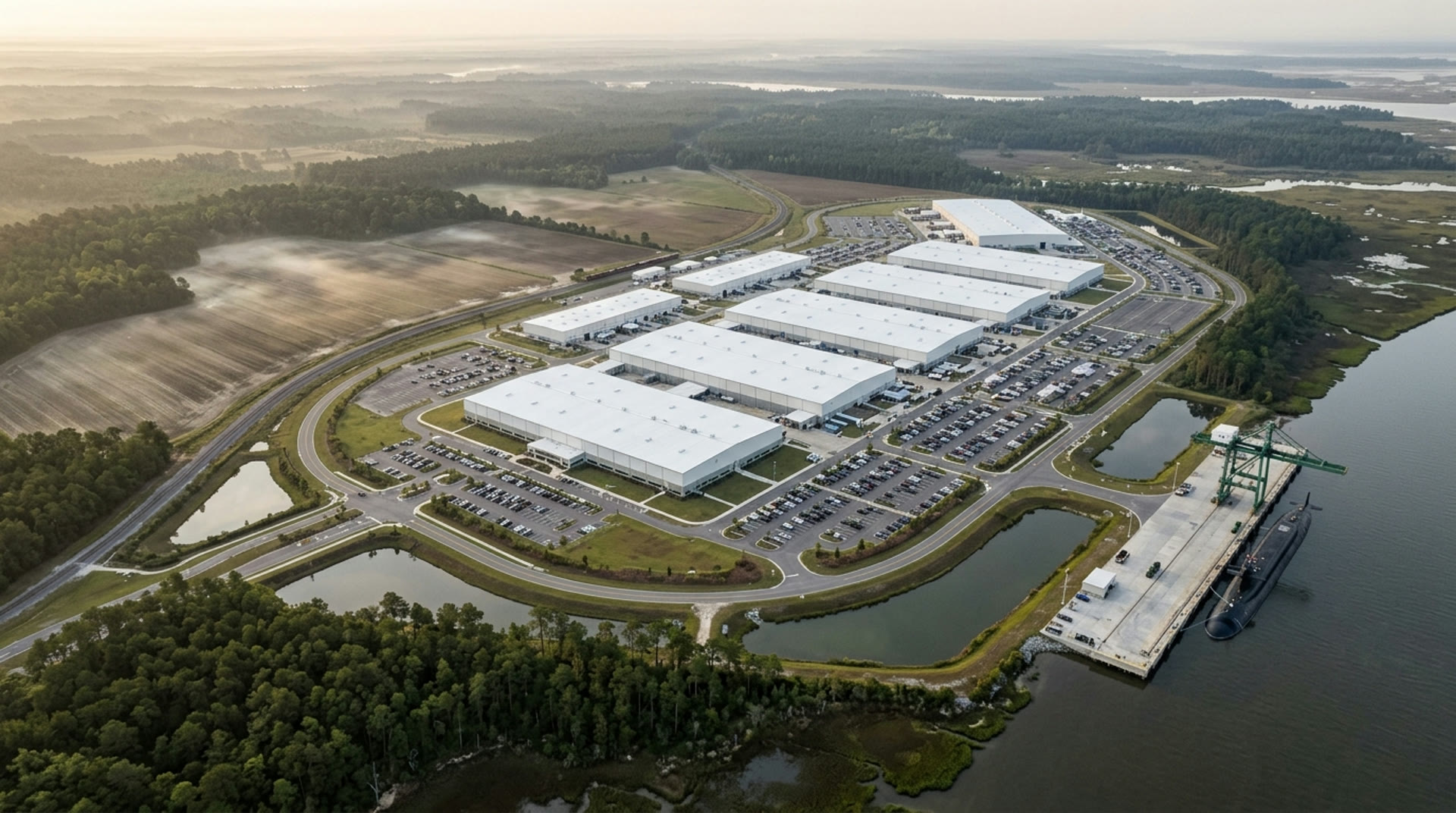
Every figure on this page is a design target derived from the commercial platform plus the configuration delta. No GHOST has been built and no live-fire qualification has been conducted. Site imagery is engineering visualisation. Weapon release occurs only under human authorisation, hash-chained and signed to REVENANT LEDGER. No export-controlled information is published on this site.